Site Visit: Layered Lighting In New York Homes
the esd journal
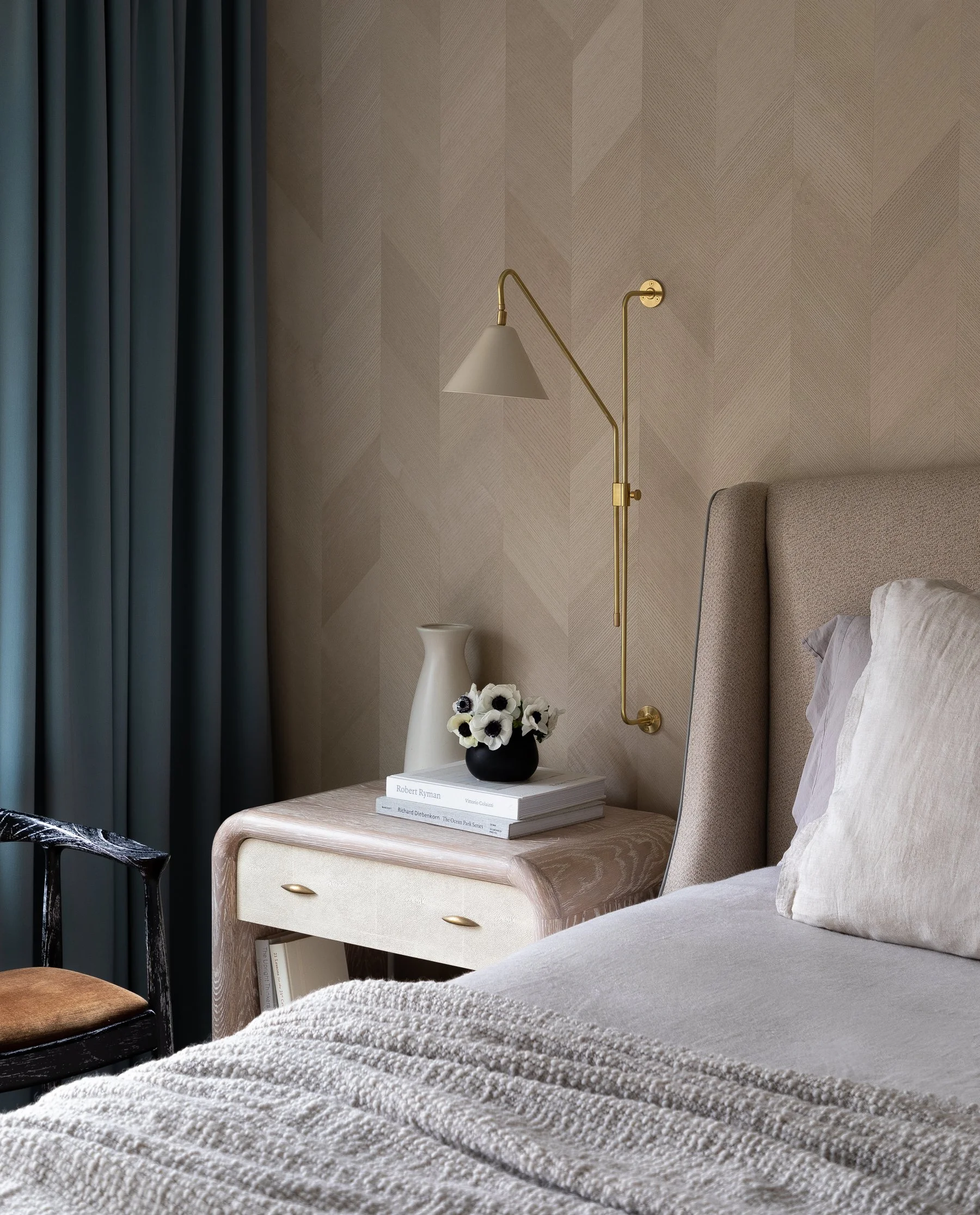
Site Visit: Layered Lighting In New York Homes
At its very core, layered lighting is simply having more than one type of light, each with its own purpose within the space. Mixing table lamps, sconces, floor lights, and ceiling lights creates a varied and optimized lighting landscape. Especially well crafted lighting arrangements will also take into account the available natural light. Areas positioned near windows do not need an abundance of other light sources. Rather, they are enhanced by lighting that suits whatever task is done in that space when the sun sets.
The Layers of Layered Lighting
There are three primary layers to lighting. These apply to any space, domestic or commercial. Additionally, in every project, natural lighting must be considered. Not only does it change your need for certain types of lighting, but it interacts with furnishings, window treatments, and decor differently than installed lighting.
Ambient
Ambient lighting is the room’s primary lighting source. Often appearing in the form of recessed lights, chandeliers, and other forms of large ceiling lights, this is the light you’ll use to brighten the entire space. A fantastic way to ensure this larger light doesn’t overwhelm every occasion is to ensure a dimmer is installed to adjust it to the perfect glow.
Task
Task lighting is more direct. This would take the form of pendant lights, table lights, and sconces directed to highlight art. Certain floor lights also make great task lights as they can be placed in reading nooks or by beds and desks to provide purposeful light.
Accent
Accent lighting is created through sconces, spotlights, small table lights tucked onto shelves, and unique lights that provide a warm glow to give the room atmosphere. This is the fun lighting that might not serve a very specific purpose or light up the whole room, but serves more of a decorative purpose.
Site Visit: ESD Projects with Layered Lighting
Come with us as we explore the why behind ESD projects and the ways they incorporated layered lighting.
Madison Square Park Project
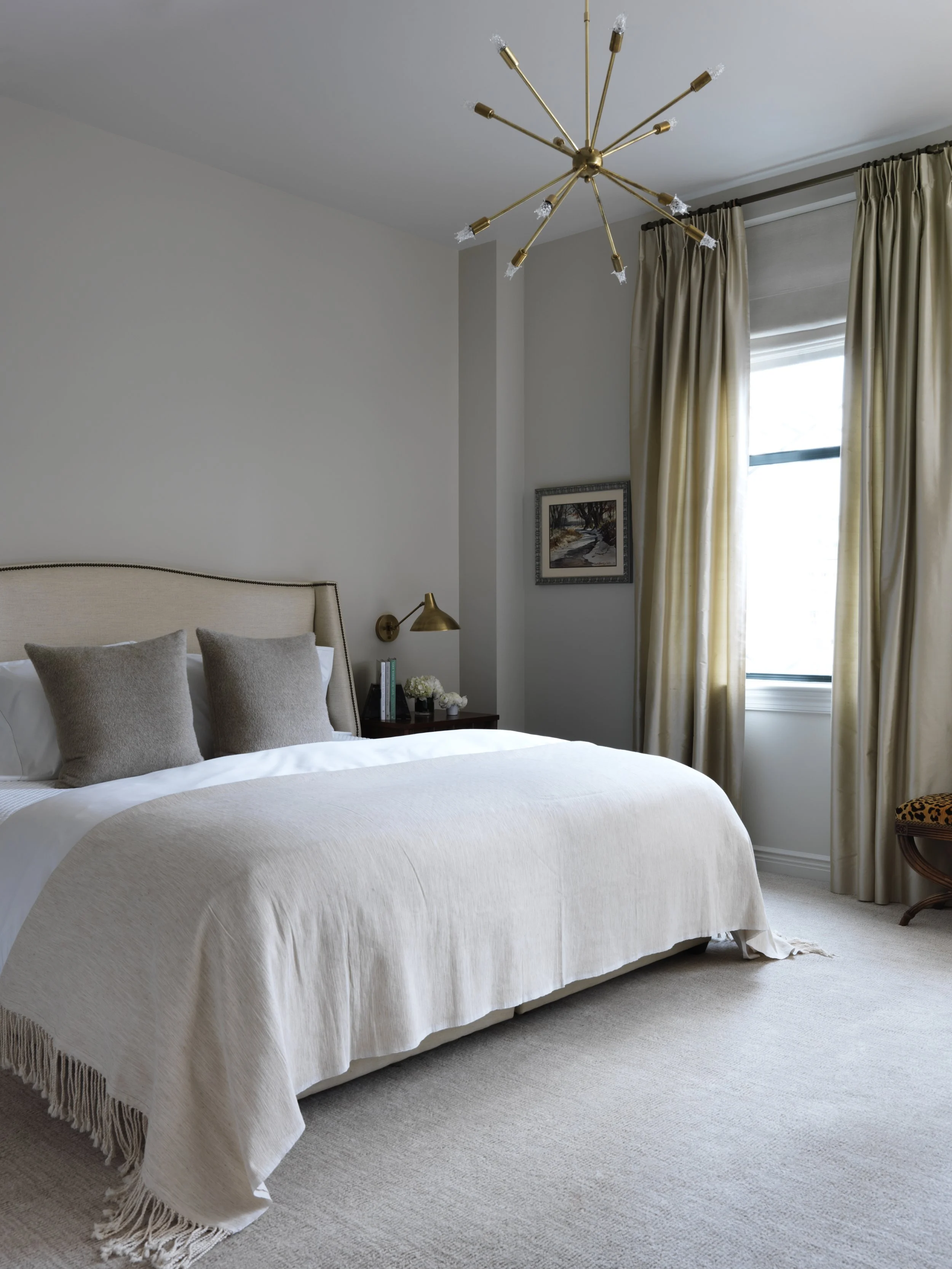
This master bedroom in our Madison Square Park project features a large chandelier and a bedside light. Both are finished in a warm brass, connecting the two and bringing out the color of the curtains and accent furniture.
These two lights also offer gentle contrast with the chandelier showcasing a more artistic and bolder expression while the adjustable, bedside lamp has a more minimalist and serene presence.
PC: Jonny Valiant
Park Ave. Project
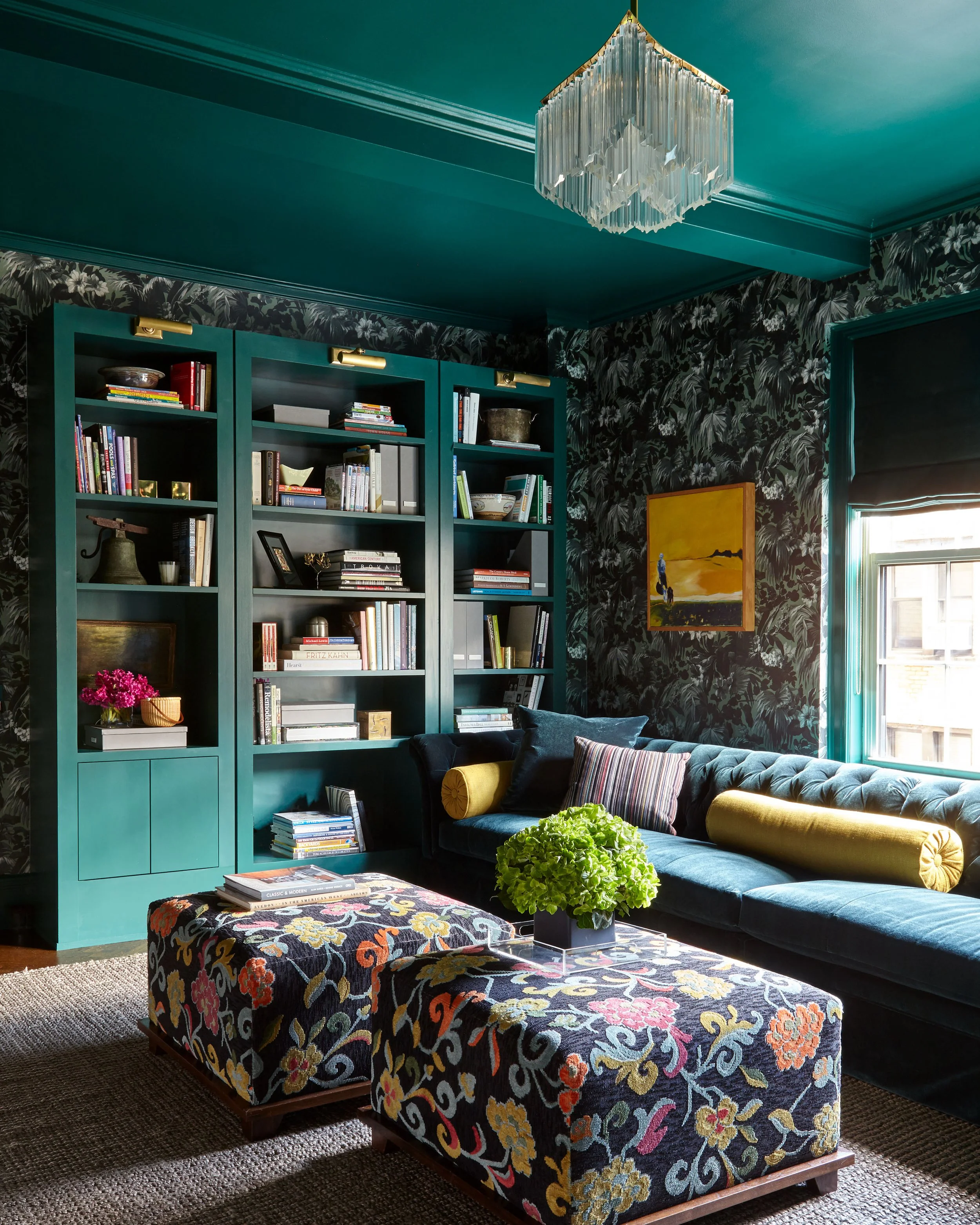
At our Park Avenue project, we had so many rooms to work with. Each had their own bold personality and required lighting that fit effortlessly into the residents’ lives. In the Library, we not only installed a crystal chandelier that brought a little Art Deco glam to the moody vibes of the room. We also used long sconces to illuminate the bookshelves and add an old-world library feel to the space.
PC: Joshua McHugh
PC: Joshua Mchugh
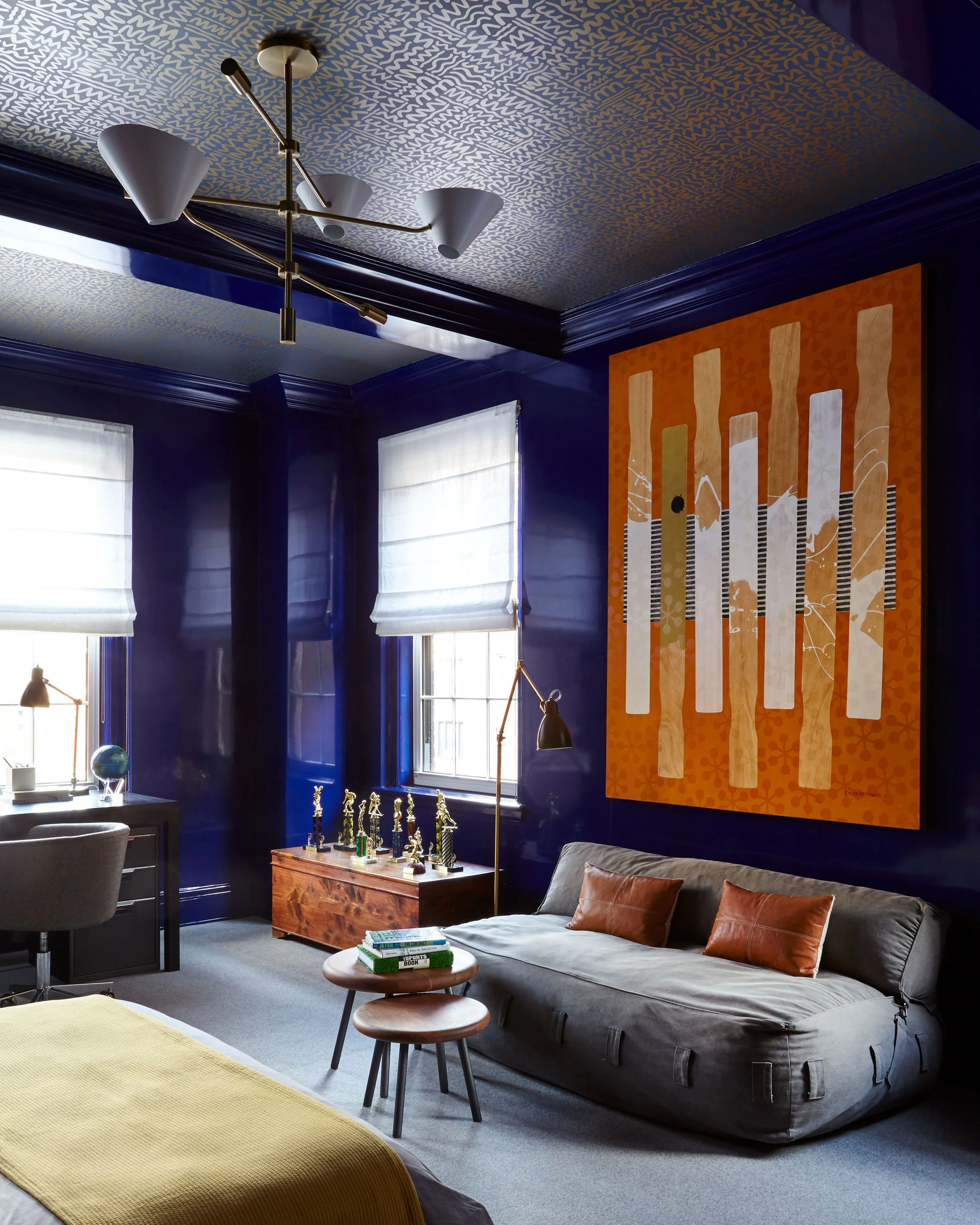
In one of the bedrooms, we needed to address various aspects of a young man’s life. From lounging to studying, to more functional lighting for the bedside lamps, we chose similar table, floor, and wall lights to supplement the large, architectural chandelier.
York Street Project
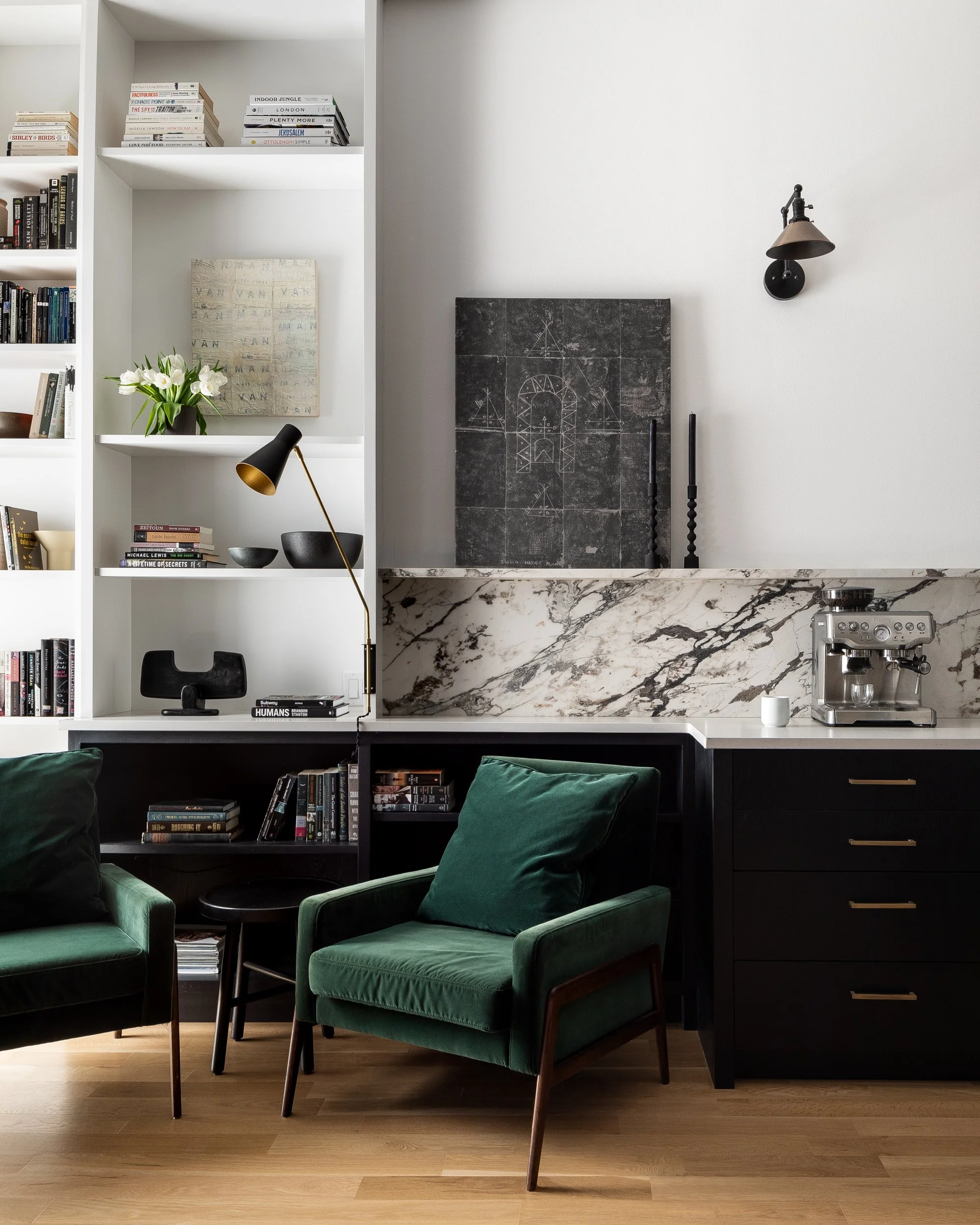
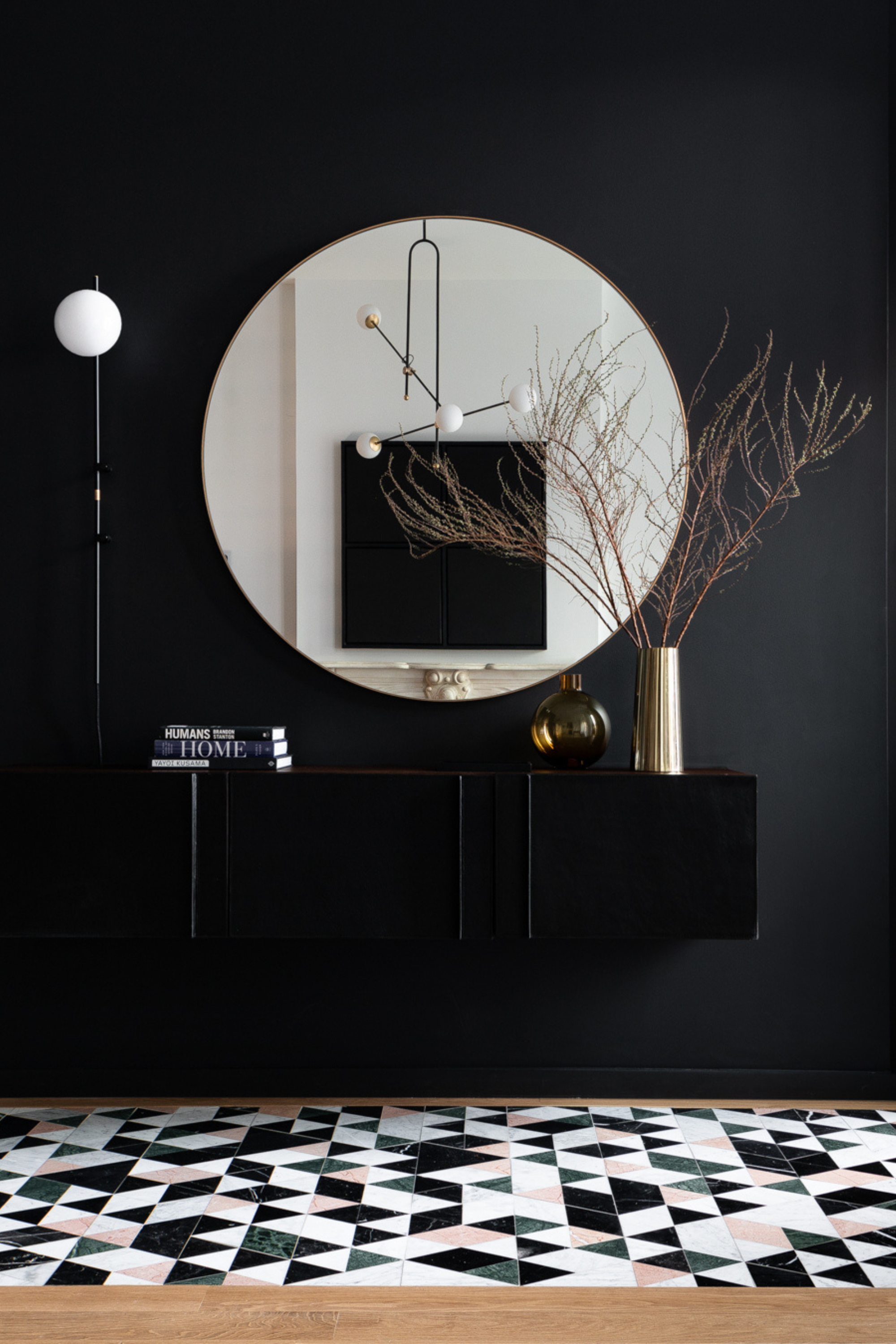
Our York Street project had a very unified color palette throughout the whole house and the lighting followed; we kept it neutral and minimalist, prioritizing frosted globe shades and metallics finished in brushed brass or black. This allowed the lighting to slip into the background when needed, but stand out where needed.
In the coffee corner/lounge space, we obviously needed some task lighting that served two different purposes. One is the table light focused on the chairs and the other is sconce that illuminates the espresso machine and countertop. These lights can work together to brighten the entire area, or one can be left on for a moody atmosphere.
Finally, we have the wall lights in the foyer that blend into the black wall, adding slight variance, complementing the round mirror, and matching the chandelier in the living room just inside the door.
PC: Haris Kenjar
PC: Haris Kenjar
Work with a Designer for Perfect Lighting
The art of layering lighting starts with a strong foundation and takes into consideration natural light, the architectural elements of the home, and adds depth to your room’s composition. More than just a functional aspect of design, lights can shape the whole project and define the very atmosphere and use of the space.
Work with a designer to achieve the perfect layered lighting in your home or commercial space.
Photography Credits for Top Photo: Haris Kenjar